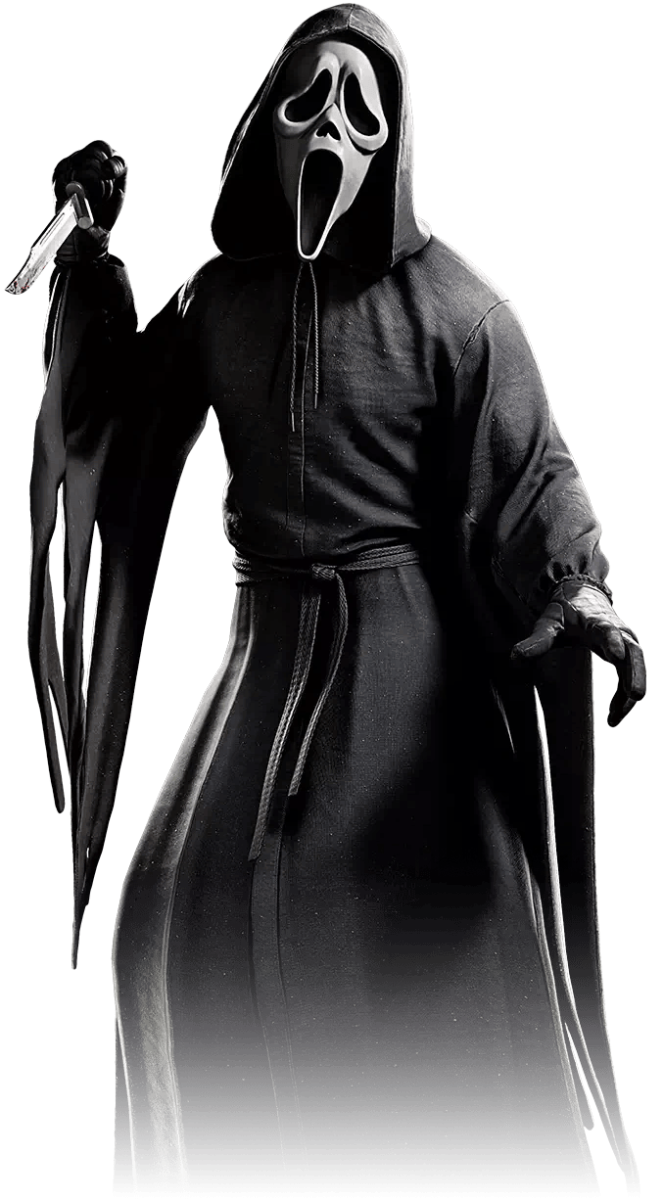
Originally a mask from the company “FunWorld” named the “Peanuty Ghost,” it has now become a worldwide phenomenon, the story of the classic slasher villain, Ghostface. From a recent form sent out to the students of Milford High School, the most iconic horror villain of all time was the Scream series (winning with over 1/3 of the overall votes!). This story follows the production process it was making the first Scream movie. From the rights to filming locations, to feedback from the studio standards, to even the mask, so sit back, grab your candy, and enjoy.
From its earliest days, screenwriter Kevin Williamson and actor Wes Craven were put under heavy fire for their movie idea originally titled “Scary Movie” (now its own series of satirical nonsense) due to the script and plot being intensely dark. These issues caused Craven to get feedback on how scary the original design for Ghostface’s mask was. Despite all of these controversies, the duo pushed through and made the movie, ultimately paying off as it nearly revived the entire genre as a whole.
Slasher films as a whole declined greatly in the early 90s, until an interview documentary released in the year 2011 revealed the creator, Kevin Williamson’s thought process as he designed the idea for the film, and within 3 days of the idea of a serial killer making calls to a friend/s, the script for the first scary movie was born.
Wes Craven, originally known for redefining the genre with 1984’s “A Nightmare On Elm Street” was seen as a great opportunity for Williamson, who had thought with the assistance of Craven, they together could redefine the genre once more. For Williamson, Craven was on his way out of the horror movie scheme.After making these movies for 2 decades he no longer wanted to be a part of the drama that came with production. When fans came up to him and stated, “Your movies are not scary anymore,” this lit the spark in Craven’s heart once more to eventually join the team for the production of the first “Scream” film. (Chris Sasaguay)
Along with the issues of the script being questionably glamorizing violence in the media world, the mask itself used for the classical killer was actually found in a random bedroom by Marianne Maddalena as she was looking for a good location during the pre-production phase. Because the mask was a copyrighted Halloween prop, the company behind a lot of the production and distribution of the first three films felt it to be unnecessary to pay of the licensing, so variations were made with tweaks to the design, (Sasaguay) Craven loved the original design of the mask however, this wanted to avoid due to their budgeting issues of the first film and overall limitations with recording. Ultimately, settling with actually getting the license for the mask, although the film uses two different masks due to the timing of the deal, specifically in the opening scenes of the film.
The ending scene of the film was recorded at the home of the character Stu. (portrayed by the one the only Matthew Lillard, also famous for Shaggy in the 2 Scooby-Doo live action films) The film went through several issues in the last scene, where one character, Kenny (played by W. Earl Brown), after his character’s death, while on top of a news truck, had to slide down the windshield, got flung off multiple times, due to problems with the speed of the car and the fake blood used throughout the film. Matthew Lillard, when asked in an interview, states how uncomfortable the situations he was put in during recording were, from the required emotion for the scenes and the fake blood. (Still Screaming: The Ultimate Scary Movie Retrospective)
In the end, the team ultimately burned their costumes.
Lastly, the film was finally given its iconic name “Scream” in post-production. It was a hard fight to get the film out to the public, as they were sent through a gauntlet of censorship battles. The publishing team “Miramax” ended up planning the film to come out in the Winter/Christmas season to counter and oppose the original ways of Halloween movies coming out specifically in the Month of October.
In the end, Scream was released to the public in the Holiday season of 1996, becoming a smash hit with the fans and audience loved it alike, sharing it via word of mouth. The film ultimately earned its place in pop fiction as the game changer of the 1990s slashers and horror films as a whole.