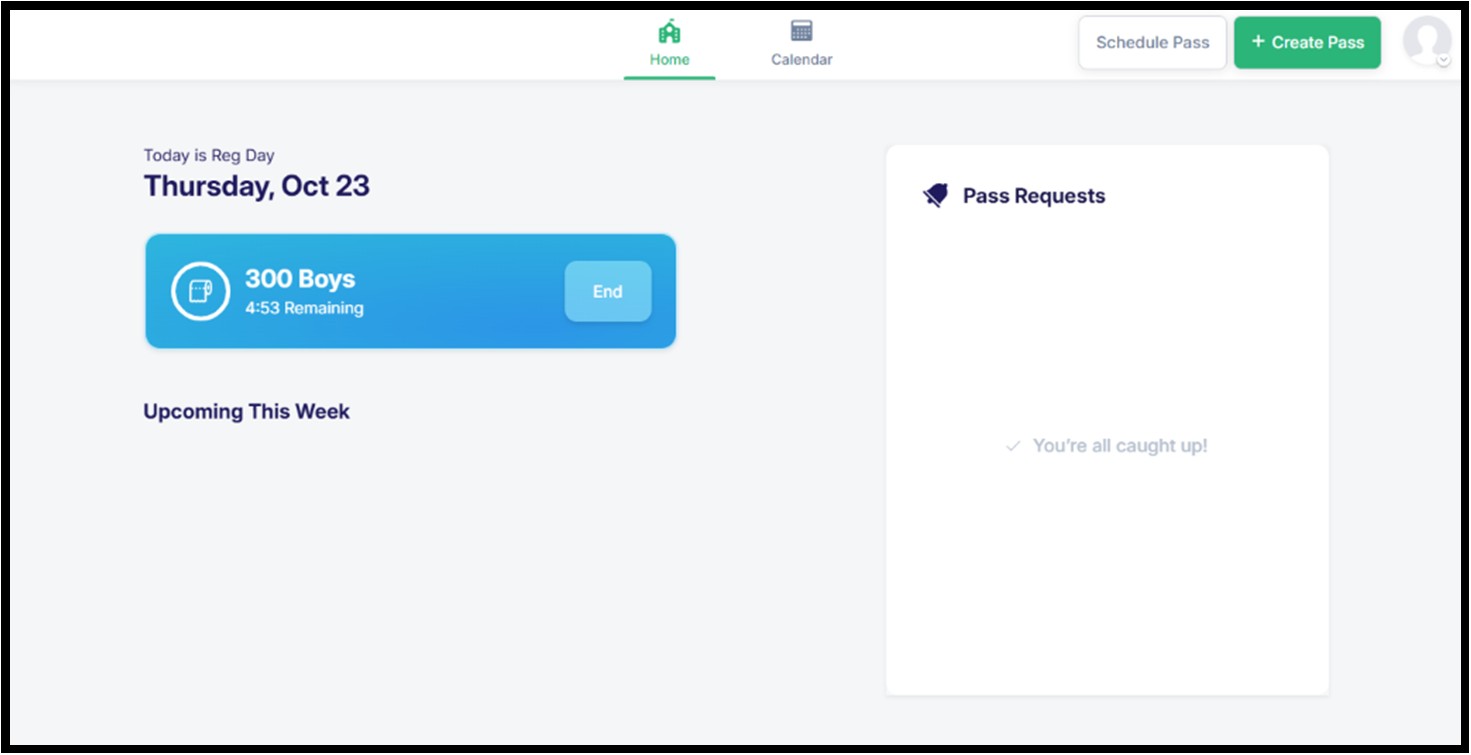
As students returned to the classroom in September, they were greeted by a new electronic system to keep tabs on their whereabouts: the Smart Pass. This pass replaces the old passes that have been used for years at Milford. It allows teachers and students to have an easier time leaving class and tracking students’ time out of class as well as how often they are out of class during the school day. It also makes it easier for teachers to keep track of tardy students and issue passes more easily. The pass allows students to be out of class for five minutes at a time, and each student is allowed three passes per day.
Assistant Principal Eric Dziobak said the idea initially came from a conference two years ago, and many members of the school administration liked it. Last year, Lakeland piloted it for the district and the feedback from students and teachers alike was positive. This year, Milford decided to try Smart Pass, hoping to track students’ movement during the school day. For the majority of students, this will have a minor impact on their day. “When we suspect a kid’s been out a lot, but we have nothing to show for it, you can’t really do a lot with it,” Dziobak said. “With this system, it keeps track for us.” That makes it much easier for the administration to monitor students who are regularly missing class time.
Within the first couple of weeks, many teachers began to implement this into their classrooms, replacing the physical passes. One of the first teachers to start was AP Calculus teacher Kelly Hemmerling. By the second week, she had already incorporated the Smart Pass, using a laptop in the back of her room. Hemmerling noted that it was much easier than taking time to write a pass for a student who might’ve been late taking a test, so that they wouldn’t be late to their next hour. “I guess I did get excited about it, in the same way I got excited when I first started collecting homework on Google Classroom,” Hemmerling said. The pass eliminates another paper and helps to prevent disorganization in attendance. Hemmerling also notes how she prefers its ease of use, “If a student comes to class and they give me a paper pass, it doesn’t usually have their name on it, so I have to remember who they were and what hour they were in.” The pass makes it much easier to keep track of students’ tardy or seminar passes.
While feedback on the Smart Pass from teachers and administration has been positive, students have mixed reviews. Senior Nolan Treder argues that it isn’t fair for students who have not abused the old system to only have a limited amount of time out of class. “Five minutes is not nearly enough time,“ he agues, “especially if you need to visit your locker across the school, or if you need to use the bathroom and the one you go to is closed.” This type of reaction is a common complaint from many of his peers. Students are accustomed to the old system, and the new system can be frustrating. Many students also argue that the Smart Pass is too limiting for the average student.
This system, overall, was implemented to help the administration, students and teachers alike. However, there are many mixed reviews, especially coming from students, as some of them think it limits their time outside of the classroom too much. As time passes, the effectiveness of the smart pass will more clearly be seen, for now it is the administration’s effort to keep the students and staff more in control of movements throughout the school.